Concrete
Preparing Surfaces for Stamped Concrete
The pattern and color get the attention, but a stamped slab succeeds or fails on the work that happens before the pour.
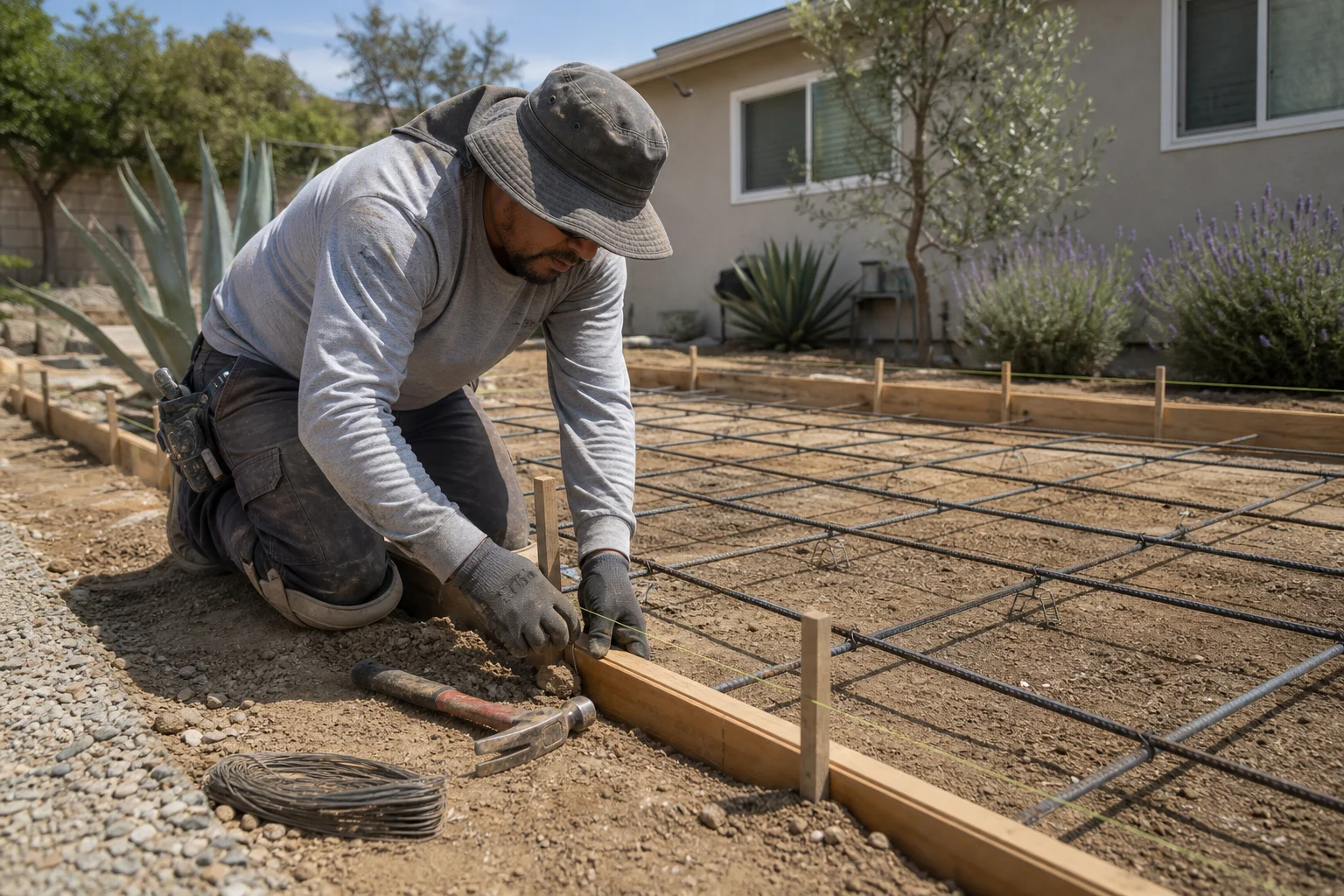
Sub-grade and drainage
The ground under the slab has to be compacted and evenly moist, and formed to fall away from the house at roughly a quarter-inch per foot. Soft spots or uneven compaction become cracks; flat or reverse fall becomes a puddle against your foundation. This is where a rushed job shows within a year.
Reinforcement and joints, planned up front
Steel — mesh or bar — holds the two sides of any crack together so it stays tight and hidden. Control joints are planned before the pour: placed at the right spacing and at inside corners so the slab cracks where you told it to, along a line, instead of wandering across your pattern.
Timing the color and stamp
Base color goes in the mix so surface wear never reveals grey. Accent color and release powder go on as the crew stamps, working the mats in sequence and in a set window as the concrete firms up. Miss that window — too wet and the pattern closes, too stiff and it won’t take — and no amount of sealer fixes it. Prep buys you that window.
Related service
This guide covers work we do. See Concrete Stamping or request a free estimate.
Keep reading
More guides
Ready for a yard that holds up to the heat?
Book a free on-site estimate. We measure, talk options and materials, and leave you with a clear number — no pressure.